Essential Web Hosting Security Standards (2027 Guide
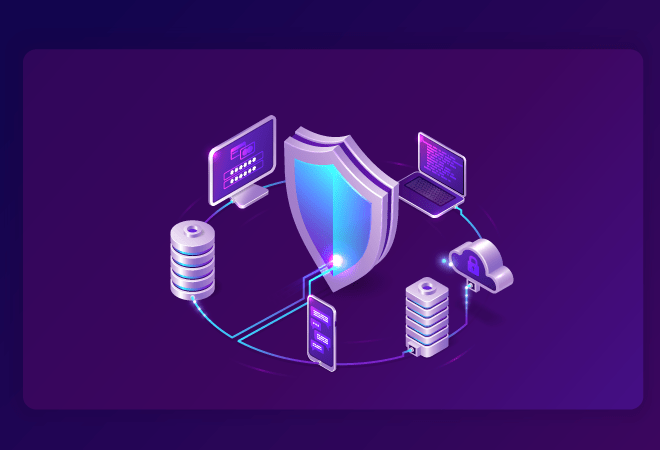
Digital security goes far beyond dropping a free Let's Encrypt SSL certificate onto a domain. Real security roots itself in hypervisor/container isolation boundaries, real-time Layer-7 heuristic inspection, and proactive kernel hardening. A single compromise cascades into browser blacklisting, search engine penalty loops, and irreversible brand damage. This engineering guide outlines non-negotiable security pillars for 2027, spotlighting Host Serve.
Enterprise Hosting Security Matrix (2027)
Security PillarLegacy / Cheap Shared StandardEnterprise-Hardened (Host Serve Tier)Operational ImpactTenant IsolationPorous file boundaries / shared runtimeStrict micro-segmentation / cgroupsEliminates cross-account symlink attacksLayer-7 WAF ProtectionStatic regex matching / high false-positivesBehavioral anomaly & bot-score gradingBlocks zero-day SQLi/XSS cleanlyMalware ScanningHeavy cron-job disk thrashingReal-time I/O-intercept runtime scanPurges injected payloads pre-executionTransport & Crypto StackLegacy TLS 1.2 / manual chain configAutomated TLS 1.3 + HTTP/3 baselineZero cryptographic handshake friction
5 Pillars of Hardened Web Hosting Infrastructure
- Rigid Container Boundary Enforcement: Zero cross-tenant visibility; kernel-level file-system hardening blocks local privilege escalation or symlink snooping.
- Intelligent Brute-Force & L7 Shielding: Adaptive rate-limiting and behavioral challenge-response hooks protect login gateways (
wp-login.php, REST APIs) from botnet credential stuffing. - Zero-Downtime Kernel Live-Patching: Security vulnerabilities in underlying Linux OS kernels patched in-memory without forced hard reboots or service blips.
- Mandatory Identity Governance: Multi-factor authentication (MFA) enforcement across control planes, granular key-based SFTP policies, and IP-restricted management layers.
- The Host Serve Security Paradigm: Automated edge filtering backed by human SOC escalation to author custom WAF rules during novel exploit vectors.
Golden Security Rule:
Never rely solely on application-layer security plugins. If the base server runtime or I/O isolation layer is compromised, WP-level plugins offer zero systemic defense.
Related Posts


💬 Comments
No comments yet — be the first to comment!